
How One Researcher Learned to Climb the Startup World
Experienced hikers know a trick for getting up steep mountains. When the trail gets hard and the air feels thin, you do not stop to rest. Instead, you take one step, plant your foot and pause just long enough to catch your breath. Then you do it again. Hikers call this the rest step. It is how you keep going without giving up before you reach the top.
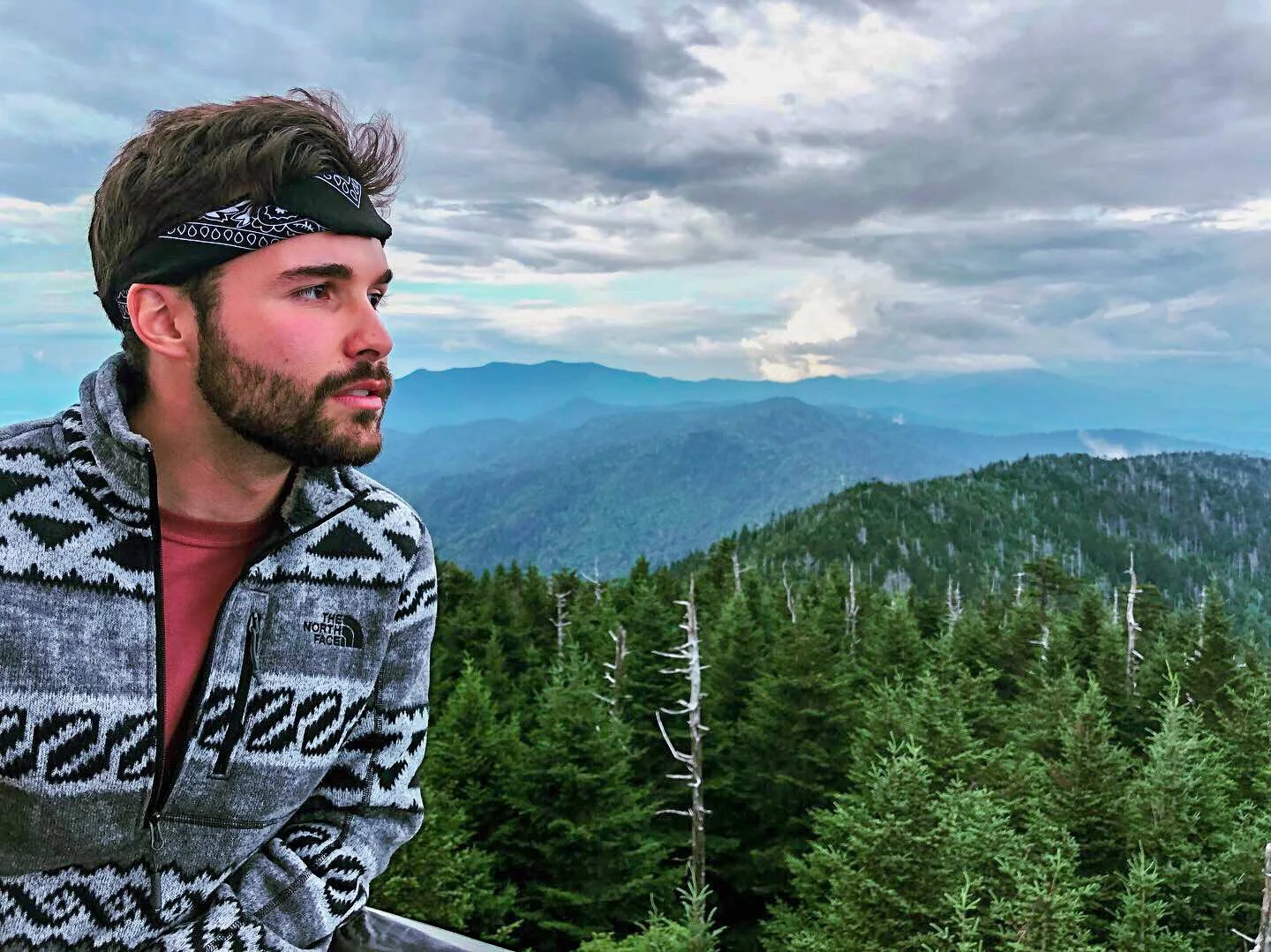
Dalton Nelson, a biomedical engineer at Vanderbilt University, says it is also how he made it through the National Science Foundation (NSF) I-Corps National Cohort. "You understand that you have to stay in motion because you have to summit and get back down before it gets dangerous," he said. "So you just keep rest-stepping your way through."
Over the past year, Dalton has been working to turn scientific research into a real product that could help patients. In October 2024, he founded Jay Biolabs, which has since filed a patent for its core technology and received a $25,000 grant from the Innovation Catalyst Fund. He is joined by Frederick Haselton, PhD, a Vanderbilt biomedical engineering professor and veteran diagnostics researcher who serves as the team's Technical Lead, and Nile Harris, a MedTech executive and consultant with two decades of experience at companies like Medtronic and Abbott, who brings commercial and strategic expertise to the venture.
Together, the team has built a testing tool that can check for hundreds or even thousands of genetic targets at once, all using a single test tube. At first, the team focused on respiratory illnesses. Through the I-Corps program, though, they realized the technology could go much further. They talked to cattle farmers about animal health, explored using it as a tool for medical researchers, and eventually landed on cancer testing as the strongest fit. "It's amazing the kind of reach that genetic sciences has," he said.
Before joining the National I-Corps program, Dalton took part in the Sullivan Family Ideator Program, a six-week online cohort run out of Vanderbilt that covers the same core ideas as the national program, just at a slower pace. He says anyone hoping to join the national program should start there. "It gives you the same valuable insight, and it's up to you to take advantage of that," he said. He also encourages future applicants to think about their technology the way a customer would, not just the way a scientist would, by talking to real people who might use the product and looking up data on the market. "If you have that depth of understanding, you can provide a really good description of your potential commercial impact," he said.
That skill of talking to people is what the National I-Corps program is all about. Every participant in the national program must complete 100 interviews with potential customers. One tip that Dalton had for tackling this hurdle is going to relevant conferences. At a medical conference in California, he finished 55 of those conversations in just three and a half days. His top tip: meet people in person and skip the recorder. People open up more when they do not feel observed or documented. The approach that worked best was simple curiosity. When people felt he was there to learn rather than pitch, they talked freely. "When you go in with the I-Corps mindset of just asking questions and not trying to sell anybody on anything, people warm up to you," he said.
For Dalton, however, the largest challenges weren't the travel or the interviews. It was learning to see his own work in a new way. Scientists are trained to ask whether something is interesting. Entrepreneurs have to ask whether anyone needs it and will pay for it. Those are very different questions. "There's still a leap from what is a cool thing of technology to what is a meaningful thing for society," he said. "That's the gap we're trying to bridge." The time commitment also caught him off guard. The program estimates about 15 hours a week, but Dalton found it took significantly more, especially when tracking down the right people to interview. His advice: start setting up conversations the moment you are accepted, before you feel fully ready. "Don't say, 'I've got to finish my other work so I can focus on this,'" he said. "Take advantage of the fact that you can pace it and get people ready to go."
In three to five years, he hopes to have a product on the market that can help more people access high-quality genetic testing. "This doesn't come from some way of us just capitalizing on the research we've done," he said. "It really comes from wanting to provide access to high-quality care to more people."
For anyone thinking about turning their own research into something real, Dalton's advice comes back to the mountain. Take the step. Find your footing. Keep climbing.
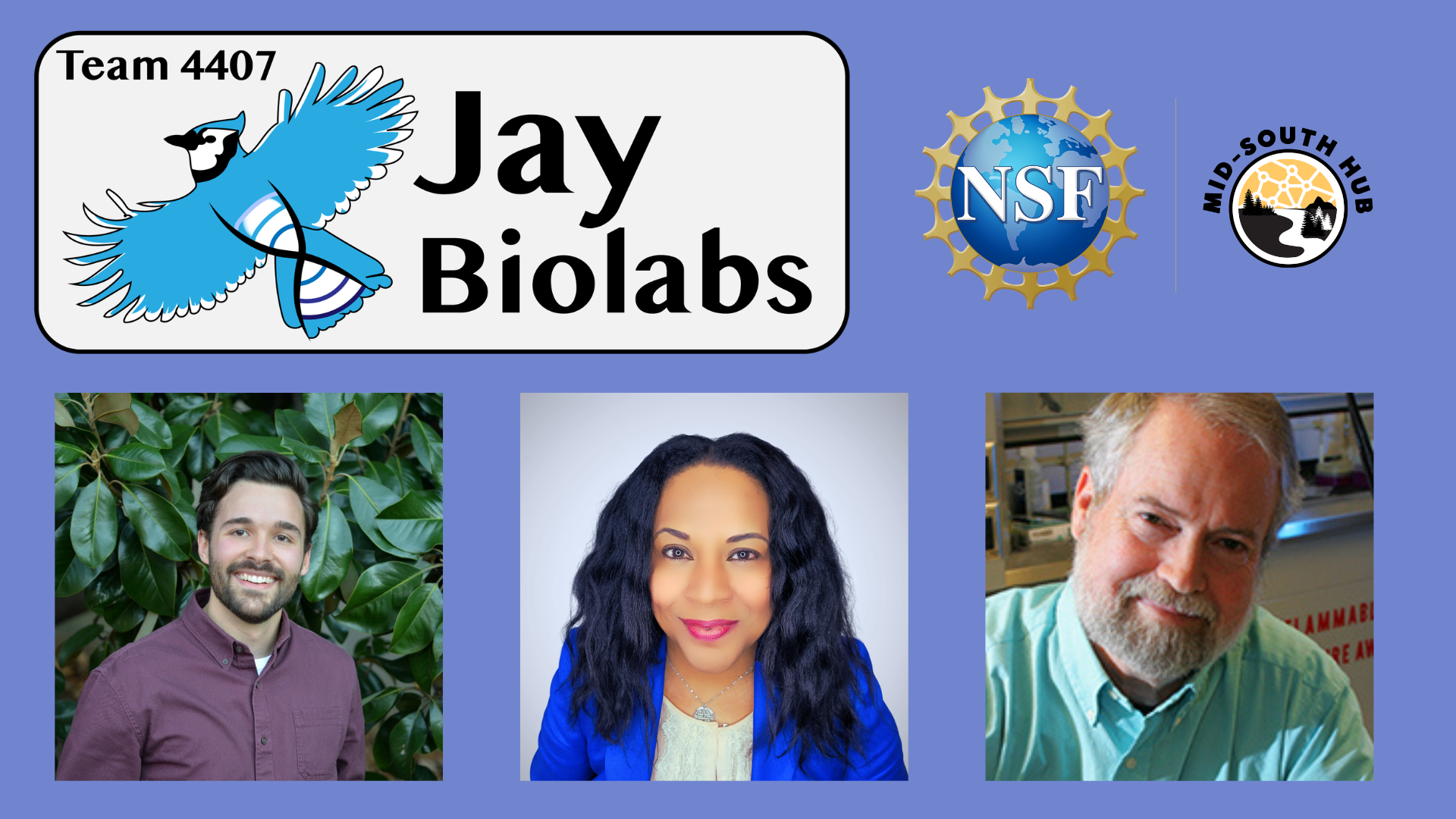
The Jay BioLabs team left to right: Dalton Nelson, Nile Harris, and Frederick Haselton, PhD