
The Pipeline: From Regional to Nationals
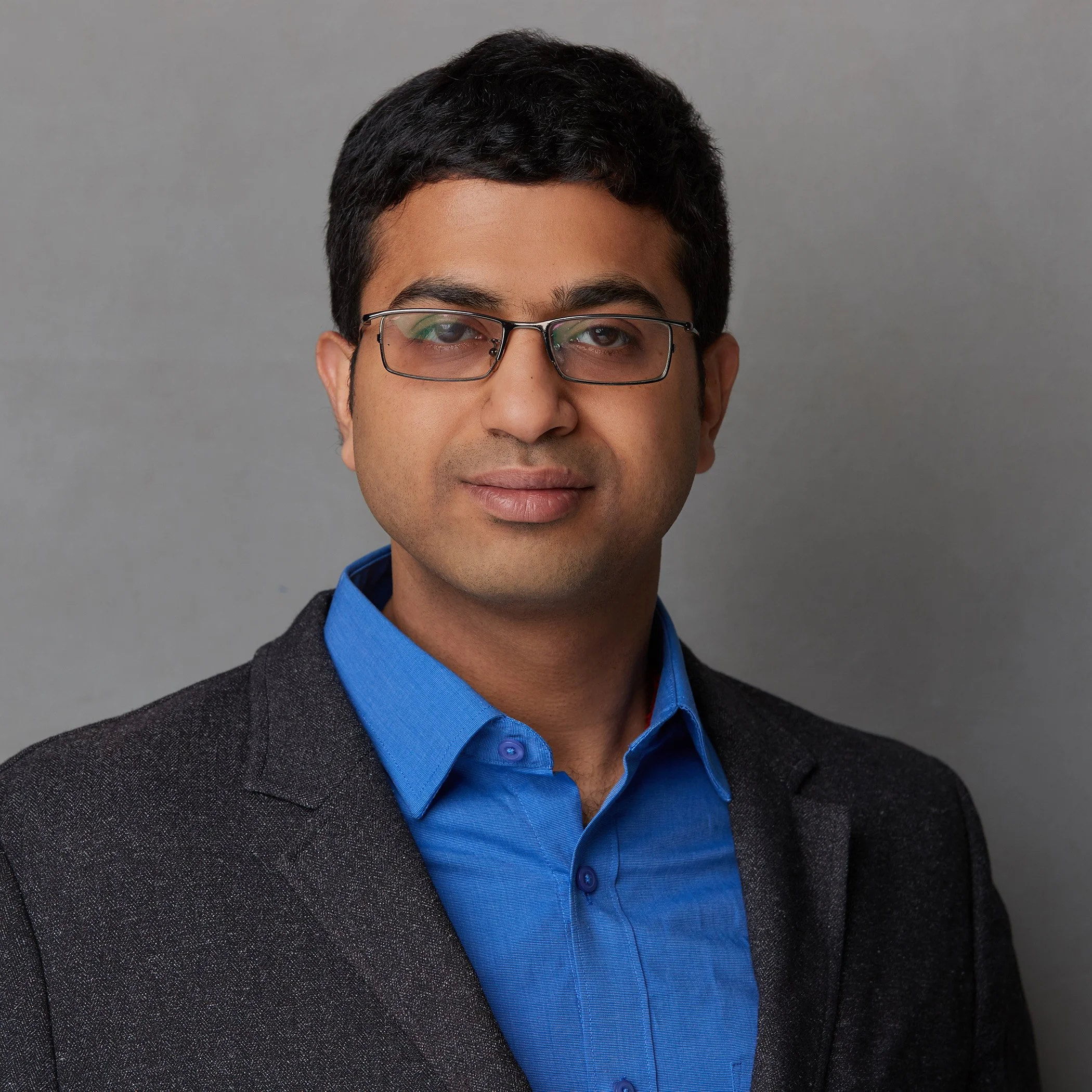
Ranganathan Gopalakrishan is a mechanical engineering researcher and faculty member at the University of Memphis, who specializes in aerosols and powder research. His team invented a patented method to disperse dry powder as aerosol using ultrasonic waves. But commercialization raised a fundamental question: was there actually a market?
"We had academic research, we got a patent, and the proof of concept was achieved," he said. "But the prime question was: is there a real need?" This question led him to the National Science Foundation I-Corps programs. His team, Ultraplume, started with a regional program in the spring of 2025 through Epicenter, a startup accelerator in Memphis. The team included Gopalakrishnan as the technical lead, and two entrepreneurial leads: Dr. Sahana Kalburgi and Dr. Piyush. At that point, the technology seemed to have multiple applications in many different fields.
"We spent that first regional program just talking to very different types of people. Doctors, engineers, people doing laboratory work," Gopalakrishnan explained. "We were trying to figure out where the need might be the strongest." A requirement of the regional programs is to complete a number of customer discovery interviews. Through the regional programs, participants are learning how to ask the right questions in a low stakes environment.
Through this first regional program, Gopalakrishnan's team was able to narrow down to two potential applications, which required further discovery. In the fall of 2025, they participated in the Sullivan Family Ideator program at Vanderbilt University, where they interviewed about 20 pulmonologists. They thought they had officially narrowed down the field upon entering into Nationals, to patients with cystic fibrosis using inhalers. They were wrong.
Gopalakrishnan's team completed 110 interviews throughout the seven-week program, guided by industry mentor Yesenia Sevilla, who brought what Gopalakrishnan called an "eagle's eye view" across industries. "Almost every week there was a pivot", he said. "This seven-week National I-Corps was a very transformative experience. Everything changed over the period of seven weeks, but it also gave us a lot of clarity on what to do next."
According to Gopalakrishnan, that seven-week program worked well because of what came before. He credits the regional programs as foundational to success with Nationals. "If I had not done the regional, we would not have been successful," he said. "It's not easy for academics or anyone to interview people just like that. You need practice figuring out the right questions to ask."
Now having completed two regional programs as well as nationals, Gopalakrishnan's main advice for future cohorts is preparation. "Start networking months before your program begins," he noted. "If your cohort starts in May, begin outreach in March or early April. Use tools like Calendly to make scheduling easy. Make it simple for people to help you. You have to strategically network."
During nationals, Gopalakrishnan and his team also attended two industry conferences. They got about 40 interviews in one place. That strong start mattered. Once they crossed 50 interviews, it became a countdown. "Having a strong start is very crucial," he said. "It sets the momentum, it gives you more contacts, it gives you confidence."
By the end of nationals, the picture was clear. The team knew who their customers were. They understood what those customers needed. That knowledge changes everything because you can't budget for something if you don't know what to build.
For Gopalakrishnan, the transformation went deeper than the data. He came into I-Corps as a researcher. He leaves it thinking differently about his work altogether. "It's made me a better researcher to validate my assumptions against what's on the ground," he said. "Not everything is a physics experiment. Business is inherently about people and relationships. Sometimes technology doesn't get adopted due to scientific reasons, but for many others."
He also learned something about efficiency. What might take a researcher four years to figure out through reading and thinking can take ten minutes in conversation with an expert in that field. "Why do you want to spend four years learning something you can figure out in ten minutes?" he asked.
Now Gopalakrishnan and his team are combing through the data from Nationals, finding where the overlap exists between what's needed and what can be done. The work isn't finished. But the direction is clear. Not because he assumed it, but because 110+ conversations over these three programs taught him how to ask the right questions. And how to truly listen.